
Choosing the right roofing material is one of the most important decisions when planning a roof replacement in British Columbia. With the province’s combination of heavy rainfall, coastal humidity, snow, temperature fluctuations, and strong winds, your roof needs to do more than look good. It must protect your home from the elements while providing long-term durability and value.
Whether you’re replacing an aging roof in Metro Vancouver, upgrading a home in the Fraser Valley, or building in the Okanagan, selecting the right material can make a significant difference in your roof’s lifespan, maintenance requirements, and overall cost.
In this guide, we’ll compare the best roofing materials for BC homes, explore their advantages and disadvantages, and explain how an experienced roofing company can help you choose the right solution for your property.
Before deciding on a roofing material, consider the specific weather conditions in your area, your home’s design, and your long-term budget.
Here are the most important factors to evaluate when planning a roof replacement.
Rainfall and moisture resistance: Coastal areas such as Vancouver, Burnaby, Richmond, and North Vancouver experience frequent rainfall and damp conditions. Roofing materials must provide reliable waterproofing and resist moisture-related deterioration.
Snow and wind resistance: Homes in the Fraser Valley, Interior BC, and mountainous areas may experience heavier snowfall, strong winds, and significant temperature changes. Your roofing system should be appropriate for local conditions and the roof’s design.
Durability and lifespan: A roof replacement is a substantial investment. Choosing a material with a suitable service life can help reduce future repair and replacement costs.
Energy efficiency: Roofing materials, colours, ventilation, and insulation can affect your home’s energy performance. The best combination depends on your climate, roof design, and building envelope.
Installation and maintenance costs: The initial price is only part of the total cost of ownership. Consider installation, inspections, repairs, maintenance, and eventual replacement.
A professional roofing company can assess these factors and recommend materials that meet your home’s requirements and applicable BC building regulations.
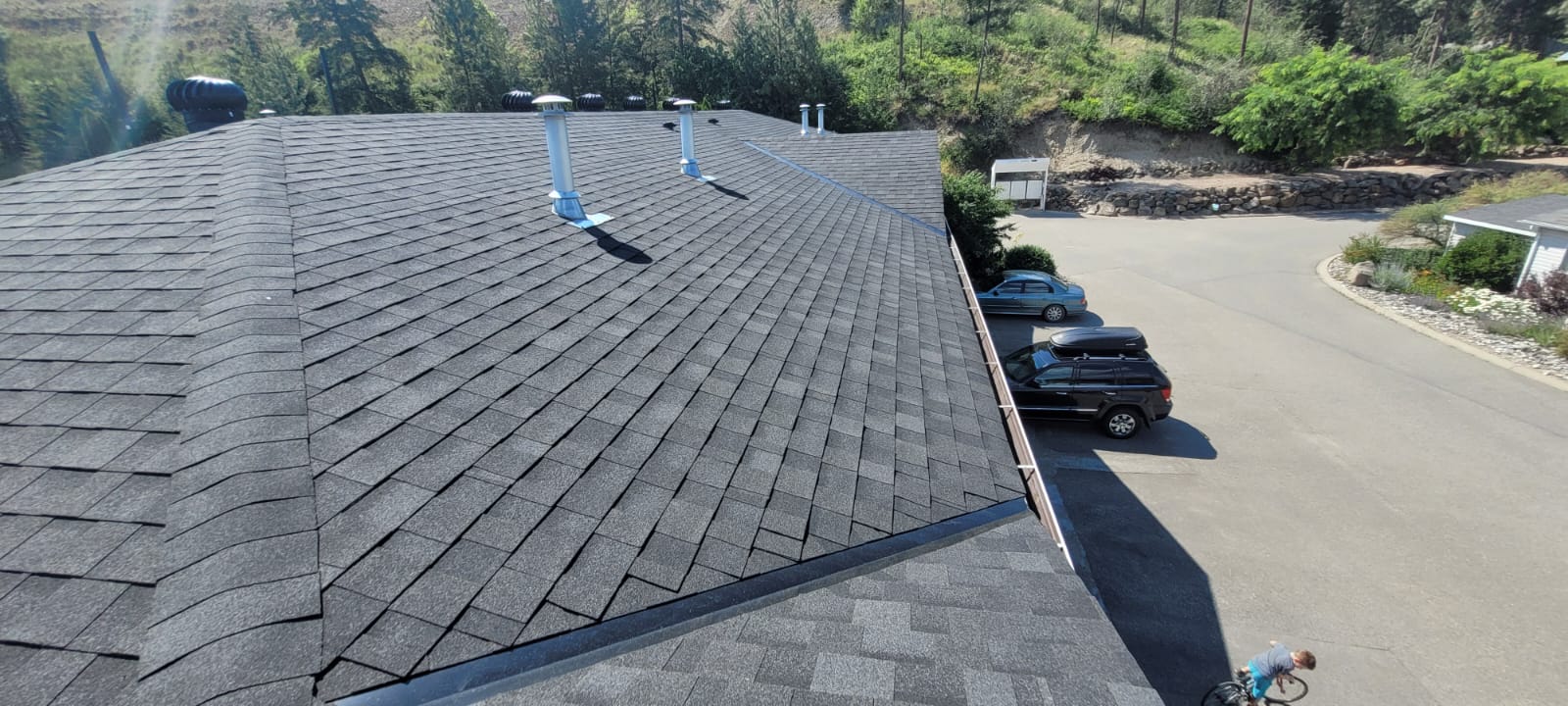
Asphalt shingles are among the most common roofing materials for residential properties in British Columbia. They offer a practical balance of affordability, appearance, and performance, making them a popular choice for homeowners looking for a cost-effective roof replacement.
Architectural asphalt shingles are often worth considering because they typically provide a more dimensional appearance than traditional three-tab shingles.
Asphalt shingles generally have a shorter service life than many premium roofing materials. Their performance depends on product quality, installation, ventilation, exposure, and maintenance. Poorly installed shingles or inadequate roof ventilation can contribute to premature deterioration.
Yes. Quality asphalt shingles installed according to the manufacturer’s specifications are a strong option for many homes throughout Metro Vancouver and the rest of BC. Proper underlayment, flashing, drainage, and ventilation are especially important in wet coastal climates.
Best for: Homeowners seeking an affordable, versatile roof replacement with dependable performance.
Metal roofing has become an increasingly attractive option for homeowners who want a durable, low-maintenance roofing system. Common options include steel and aluminum, with different finishes and protective coatings available.
When properly designed and installed, metal roofs can perform well in many BC climates, including areas exposed to frequent rain, snow, and strong winds.
Metal roofing generally has a higher upfront cost than asphalt shingles. Installation requires specialized expertise, and poor detailing around penetrations, roof edges, and valleys can lead to leaks. In coastal areas, selecting an appropriate corrosion-resistant material and finish is particularly important.
Metal roofing can be an excellent choice for homeowners who prioritize longevity and are prepared to invest more upfront. While the initial cost may be higher, the potential for a longer service life can make it attractive over the long term.
Best for: Homeowners looking for durability, lower routine maintenance, and a long-term roofing investment.
Cedar roofing offers a distinctive natural appearance that complements many traditional homes, custom builds, and properties surrounded by trees.
Cedar shakes are typically thicker and more textured, while cedar shingles generally have a smoother, more uniform appearance.
Cedar requires careful maintenance and is vulnerable to moisture-related deterioration, moss, decay, and insect damage under unsuitable conditions. Fire performance is another important consideration, particularly in areas exposed to wildfire risk.
Homeowners should verify that the selected cedar roofing product meets applicable fire-safety requirements, insurance conditions, and local regulations.
Cedar can be suitable for some BC homes, but frequent rainfall and prolonged dampness make installation quality and maintenance especially important. A professional assessment can help determine whether cedar is appropriate for your property’s exposure and local conditions.
Best for: Homeowners who value natural aesthetics and are willing to maintain their roofing system.
Concrete and clay tiles are known for their distinctive appearance and potential longevity. They are available in a variety of shapes, colours, and profiles, making them suitable for homes with Mediterranean, Spanish, or other architectural styles.
Tiles are heavy and may require additional structural support. Installation costs can be higher, and tiles can crack if improperly handled or subjected to impact. The underlayment and flashing system also require careful attention because the tiles alone do not make the entire roof waterproof.
Tile roofing can work well when the home’s structure, roof slope, drainage, and weather exposure are suitable. However, its weight and higher installation costs make a professional structural assessment particularly important before proceeding with a roof replacement.
Best for: Homeowners seeking a distinctive appearance and long-term durability with a suitable roof structure and budget.
Natural slate is a premium roofing material valued for its elegant appearance and exceptionally long potential service life. Properly selected and installed slate can last for many decades and, in some cases, well over a century.
Slate is expensive, heavy, and specialized to install. Not every roofing structure can support its weight without reinforcement. Repairs can also be costly because experienced slate roofers and matching replacement materials may be difficult to find.
Slate may be appropriate for high-end custom homes and properties where architectural character and longevity justify the investment. However, its cost and structural requirements mean it is not the most practical solution for every residential roof replacement.
Best for: Premium properties where long-term durability and architectural appeal are priorities.
The following table provides a general comparison of common residential roofing materials. Actual lifespan and costs vary depending on product quality, installation, maintenance, and local conditions.
| Roofing material | Typical service life* | Relative upfront cost | Maintenance |
|---|---|---|---|
| Asphalt shingles | 15–30 years | Low to moderate | Low to moderate |
| Metal roofing | 40–70+ years | Moderate to high | Low |
| Cedar shakes or shingles | 20–40 years | Moderate to high | Moderate to high |
| Concrete or clay tiles | 40–75+ years | High | Low to moderate |
| Natural slate | 75–100+ years | Very high | Low to moderate |
*These are broad industry estimates, not guarantees. Actual performance depends on the specific product, climate, roof design, installation quality, and maintenance. Some products may have substantially different expected service lives.
British Columbia’s varied geography means that the ideal roofing material can differ significantly from one region to another.
In Vancouver, Burnaby, Surrey, Richmond, and surrounding communities, frequent rain and damp conditions make water management a priority.
Quality asphalt shingles are a practical choice for many homes, while metal roofing can be an attractive long-term alternative. Regardless of the material, proper flashing, underlayment, roof ventilation, and drainage are essential.
Communities such as Abbotsford, Chilliwack, and Langley experience substantial rainfall, with additional seasonal weather considerations.
Homeowners should prioritize reliable waterproofing, secure installation, and effective drainage. Asphalt shingles and metal roofing are both worth considering, depending on the property’s design and budget.
Areas such as Kelowna and Kamloops experience different conditions from the coast, including hotter summers, colder winters, and potential wildfire exposure.
Roofing materials should be selected with temperature fluctuations, snow loads, and local fire-safety requirements in mind. Metal roofing and appropriately rated asphalt shingles can be suitable options.
Properties in higher-elevation and colder areas may experience heavy snow, freezing conditions, and strong winds.
The roof’s structural capacity, slope, snow-management requirements, and resistance to ice-related water intrusion are particularly important. A qualified roofing contractor should assess the complete roofing system rather than selecting a material based on appearance alone.
Even the best roofing material can fail prematurely if it is installed incorrectly.
A successful roof replacement involves more than removing old shingles and installing new ones. The entire roofing system must be evaluated to identify potential problems and ensure that the new roof performs as intended.
When hiring a roofing company, look for a contractor who can provide:
It is also important to confirm the contractor’s insurance, applicable licensing and qualifications, references, and compliance with local building requirements.
Choosing experienced professionals for residential roofing services can help protect your investment and reduce the risk of costly problems later.
The cost of roof replacement in British Columbia depends on several factors, including the size and slope of the roof, material selection, accessibility, labour, and the condition of the existing roof structure.
Asphalt shingles are generally the most budget-friendly option, while metal roofing typically costs more upfront. Cedar, tile, and slate can involve additional material, labour, or structural expenses.
Your estimate may also include:
Rather than comparing estimates based on the total price alone, make sure each roofing company is quoting comparable materials and scope of work. An unusually low estimate may exclude important components or necessary repairs.
The best approach is to request a detailed roof inspection and written estimate before making your decision.
Knowing when should you replace your roof can help prevent leaks and damage to your home’s interior.
Common warning signs include:
Age alone does not determine whether a roof needs replacing. A professional inspection can help establish whether repairs are sufficient or a full replacement is the more cost-effective option.
If you notice active leaks or signs of structural damage, arrange an inspection promptly to minimize further deterioration.
Selecting the right roofing contractor is just as important as choosing the roofing material.
Start by looking for a company with experience providing residential roofing services in your area. Ask about similar projects, the products they recommend, their installation process, and how they handle unexpected issues discovered during the work.
Before signing a contract, confirm the following:
A reputable roofing company should explain your options, answer your questions, and help you make an informed decision without pressuring you into unnecessary upgrades.
The best roofing material for your BC home depends on your budget, architectural style, local climate, and long-term plans.
For many homeowners, asphalt shingles offer an excellent balance of affordability and performance. Metal roofing is worth considering for its potential longevity and relatively low maintenance requirements. Cedar provides natural beauty, while tile and slate offer distinctive appearances and long service lives when properly designed and installed.
Whatever material you choose, professional installation and a properly designed roofing system are essential to protecting your home from BC’s changing weather conditions.
If you’re considering a roof replacement, contact an experienced roofing company to inspect your existing roof, compare suitable materials, and provide a detailed estimate. The right residential roofing services can help you make a confident investment in your home’s protection, appearance, and long-term value.
Ready to plan your roof replacement? Request a professional roof inspection and free estimate to find the right roofing solution for your home.
